Theme parks are a great day out for the family. They are exhilarating, full of fun and, for enthusiasts like me, they are our passion.
Imagine you and your family go on a trip to Blackpool Pleasure Beach. You want to go on Valhalla, the park’s best rated ride, and the story seems new and exciting to you every time.
However, your little brother is shifting towards Nickelodeon Land, and is pointing wildly at the SpongeBob ride like it could disappear at any second.
Now, you are leaning towards the original story that Valhalla has, but your brother wants to go on the SpongeBob ride as he loves SpongeBob and watches it every day. While Valhalla is not taken from a popular IP and is Blackpool Pleasure Beach’s original work, SpongeBob is an IP belonging to Nickelodeon. But what is an IP and what do they do to theme parks?
What are IPs?
IPs, short for Intellectual Properties, are: books, TV shows, brands, films etc. In other words, something that already exists, and is copyrighted as a creative work.
You might get up to watch your favourite TV show, or read a book before you go to bed; these would be examples of IPs. IPs are everywhere, and you might not even realise it. That Mickey Mouse T-shirt you wear is the branding of an IP (which in that case is Mickey Mouse, owned by Disney.) Although you might be excited to ride that rollercoaster based on a TV show you love, it might only be you that wants to.
You see, IPs attract different audiences (much like different rides are for different height requirements) since not EVERYONE likes SpongeBob. However, although some theming is attached to original rides, it isn’t the main reason that people are drawn to it. People are often attracted to an originally-themed ride because of the ride itself and not the characters plastered onto it.
So, now you understand what an IP is and how they work in theme parks, let’s see some examples of some IPs already in use at UK parks. We’ll review them based on how they attract to people, the theming details and the overall quality of the entire ride/area.
Let’s dive in…
Examples of IPs in Theme Parks:
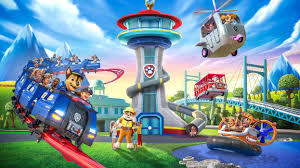
Chessington World of IPs: When a park becomes overly dependent on IPs…
You’ve probably heard of Jumanji. And The Gruffalo, Room on the Broom. Elmer the patchwork Elephant, and you’ve probably eaten an Oreo before. What do all of these things have in common? They are all IPs that have some kind of attraction at Chessington World of Adventures. Situated namely in the borough of Chessington, London, this family theme park opened in 1987 with the goal of creating the globe in a theme park. John Wardley, famous roller-coaster designer and animatronic extraordinaire (and designer of the theme park) wanted the park and zoo to show off different cultures. For example, there was Mystic East, Mexicana, Wild Asia, Transylvania and the Forbidden Kingdom, to name a few of the lands the park once had. Unfortunately, all of these have been slowly replaced with IPs. Surely, it attracts a wide range of audiences…. Or does it?
You see, when a park becomes overly dependent on IPs, it is contract after contract after contract. Next year, Mexicana will become PAW Patrol land, making the hit Nickelodeon show a fully-themed area. Wild Asia closed for good at the beginning of the season, ready for an extensive overhaul into a potential Minecraft themed land. Chessington have ripped out fan-favourite rides such as Bubbleworks and Scorpion Express, only for them to be replaced with a brand. It is difficult to market the park as a whole for the zoo when book characters and movies are stampeding the adverts you see on TV. Even if the new generation of children make the IPs quite relevant, it is surprising that Chessington chose Jumanji as an IP, considering the films are quite dated now, and the younger audience are probably unfamiliar unless older siblings or parents have watched the film. For the older Chessington visitors (who came when the park first opened), it is quite shocking to see the difference between the original theming and the now IP ridden theme park.
The final verdict? Chessington need to start balancing out their old IPs with new, captivating, original theming. It could draw a much larger audience, much like Nemesis over at Alton Towers did, reaching all over the worlds with its incredible theme.
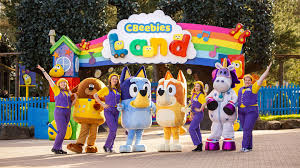
CBeebies Land at Alton Towers:
My first visit to Alton Towers was mainly in CBeebies Land, and we also stayed at the (at the time) newly-opened CBeebies Land hotel. Now, for the older children, they might not bother going in CBeebies and run straight to Wicker Man or The Smiler. For the younger ones, however, it’s a completely different story. With a bustling family-oriented atmosphere, the place is filled with CBeebies’ mascots, the ‘bugbies’, giant rainbows and their favourite characters, including Go Jetters, JoJo and GranGran, Hey Duggee, Octonauts, and most recently, Bluey. A few months ago, Alton Towers announced that a new junior rollercoaster in CBeebies Land (originally codenamed Project Sunshine), would be Bluey themed. With the series appearing on TVs all over the world, it is anticipated that this new attraction will be a success, particularly for the younger target market. The theming, whilst very basic, does immerse young children into their favorite shows. Like exploring Hey Duggee’s Clubhouse, or flying in a ‘Vroomster’ from Go Jetters, the younger ones will feel right at home. For the older kids, however, since they aren’t the target audience, they would find these themes unappealing, since they have probably moved on from Octonauts and would rather watch SpongeBob. However, what I can say is that the toddlers will say going to CBeebies Land or even staying at the hotel was the best time of their lives.
Theming: 6/10
Atmosphere: 7/10
Ride(s): 6.5/10
Overall Rating: 6.5/10

Nickelodeon Land at Blackpool Pleasure Beach:
This is definitely the most recent of the attractions I’ve been to, but I can say, Nickelodeon Land is A LOT. The attention to detail on every ride is immaculate, and all the characters you see are instantly recognisable to those who have watched Nick. The theming, especially on SpongeBob’s Splash Bash, Fairy World Taxi Spin, Backyardigans Pirate Treasure and Rugrats Lost River was amazing. It really felt like you were in the world of all the shows you watch on Nickelodeon. The Nickelodeon Streak is surprisingly thrilling (and slightly rough) for a first-time family coaster, especially on the very back row in the rain, which is when the ride runs at its fastest. However, what I can say is that the only two ‘thrill’ rides were The Avatar Airbender and The Nickelodeon Streak and the rest of the area was a bit aged and tacky, as the other two SpongeBob rides were just planted there and barely themed. Although it is a bit aged, Nickelodeon Land is still a vibrant, orange and green spectacle that shouldn’t be missed for SpongeBob fans.
Theming: 6.5/10
Atmosphere: 8/10
Ride(s): 6/10
Overall Rating: 7/10
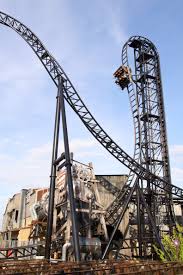
SAW the ride at Thorpe Park:
What can you say to a horror themed roller-coaster that’s rough and is only enjoyable if you get the 2nd train, have the back row and sit on the second inside seat? SAW the ride is old. It came to Thorpe Park in 2009, and about 4 SAW horror films had been released at that point. After the Eurofighter coaster opened, there was only one more SAW film released since the ride’s opening until 2017, and then the SAW franchise finished for good. Quite frankly, this IP is the least family friendly of them all, and can definitely put off a 1.4m 10-year-old from riding. There is a good amount of theming, but sadly, this coaster hasn’t aged the best and is quite painful, giving people headaches. Even if it’s not the most enticing of these IPs to experience, it gives a good shock of adrenaline and nostalgia to SAW fans.
Theming: 7.5/10
Atmosphere: 5/10
Ride: 7/10
Overall rating: 6.5/10
Legoland and Nickelodeon Universe: The IPs themselves
Now, you’ve heard of attractions with contracts and IP deals, but what about theme parks that are IPs themselves? Meet Legoland and Nickelodeon universe: theme parks with long, long contracts with specific brands. These attractions are often very well-themed, as there is only one main thing to focus on: The IP across the park. Both Legoland and the two Nickelodeon parks across America are marketed towards entirely different audiences: A family demographic for Legoland and a park for Thrillseekers and a park for Little Kids for Nickelodeon. So, let’s look at each park and compare their differences.
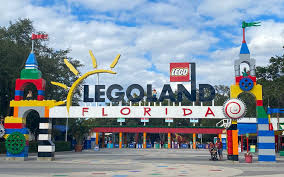
Legoland:
In case you didn’t know, there are over 10 Legolands in the world. Many are in America, but there’s one in Germany, Denmark, Japan and of course, we have our lovely Windsor one in the UK. Quite sadly, most Legolands are direct copies of their counterparts. However, Legoland Billund, situated in Denmark, certainly attracts the more thrill-seeking demographic, having over 5 roller-coasters and for the kids brave enough and a crazy planes flat ride where riders are inverted multiple times. Legoland Florida operates more like a holiday resort, in conjunction with Peppa Pig Theme Park (another park based around an IP). It has 3 resort accommodation options, and a massive park. Legoland New York is also quite unique, boasting a massive water-park. Legoland Florida and California are getting a brand-new roller-coaster and themed area next year, themed around Lego Space, and the new roller-coaster will be called Galacticoaster. Legoland Billund, however, is getting another two roller-coasters, including the Dueling Minifigure Speedway – a direct copy of the one we have in the UK. Legoland is definitely a lovely chain of parks aimed at families that appeal to a lot of people: from three-year-olds playing with Duplo, to adults who also still enjoy Lego.
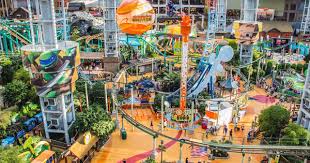
Nickelodeon Universe:
Nickelodeon are definitely more prominent in America than anywhere else. So, two indoor theme parks in The American Dream Mall and Mall of America were born! These parks are very unique, as while most theme parks have a March-November operating season, Nickelodeon Universe can operate all year round. Not only this, but in American Dream mall, the TMNT Shellraiser is still the record holder for the roller-coaster with the steepest drop, 121.5 degrees! Each ride is thought out with a target audience. Most likely if the show the ride is themed around came from Nick Jr, the ride you will find based on the show will be a kids ride. If it came from Nicktoons or the main channel, the ride is usually aimed at a slightly older audience. At some parks, more popular shows like SpongeBob and The Fairly OddParents have more than one ride. The theming in these parks is much more immersive, and every detail is immaculate. In the Mall of America, the park is far older, so feels more dated. However, American Dream, whilst being the newer addition to the chain in 2019, still honours Nicktoons from the 90s and 2000s, which means the adults get their fix of nostalgia and the kids get their fix of Teenage Mutant Ninja Turtles. Likewise, Nickelodeon is a widespread and diverse IP, meaning the audience varies and creates a family atmosphere in the park.
So, should parks stick with original theming or carry on down the route of IPs?
In my opinion, I think modern theme parks should take a lean towards original theming. It’s surprising how quickly an IP can go stale, especially books that were published an age ago and are only slightly relevant (Does anyone even read Elmer the Patchwork Elephant to their kids, Chessington?) Alton Towers’ recent route of expanding on their original theming, especially the Nemesis story and Phalanx, has been a hit with the public, and with the recent addition of Toxicator, the narrative has just got better. If parks continue with original theming, we could see stories that last for decades, much like Nemesis.
December 19, 2025 @ 1:40 pm
Omd Mia this is really good well done!!,
December 19, 2025 @ 1:40 pm
Gg
December 19, 2025 @ 8:17 pm
Mia this is amazing
January 1, 2026 @ 12:46 am
Thank you Maida you should come to newspaper next term ❤️