Extreme sports. They make your heart pound. They make your stomach churn. Love them or hate them, you can’t deny that it’s difficult to look away when people jump, dive or fly into danger.
What drives people to do extreme sports? Why are they so popular? Are they becoming too dangerous?
As a rule of thumb, most people would say that extreme sports have to have some level of risk to them, whether that is due to the surrounding climate or the activity itself. A lot of the people who participate in extreme sports usually do it alone (maybe with a helper depending on the sport) and are typically highly skilled and trained in their chosen field. Some examples of extreme sports are free diving, cave diving, free soloing canyoning, BASE jumping and bungee jumping. When many people think of extreme sports, their mind jumps to the death rate. However, is this association based in reality?
BASE Jumping
Despite extreme sports requiring an element of risk, not all extreme sports are equally hazardous. BASE jumping is regarded by many as the deadliest extreme sport. But what actually is it and why is it considered that way?
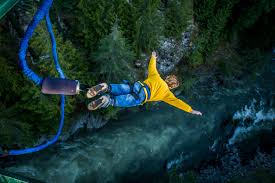
BASE jumping is similar to skydiving, albeit from a fixed location (BASE) namely Buildings, Antennas, Spans (bridges), and Earth (Cliffs). It is usually considered more dangerous than ‘regular’ skydiving as BASE jumping is done at a shorter distance. This means there is much less margin for error, which in this case could be life or death. Faulty or broken equipment is also possibly responsible for some deaths, so it is recommended that if you want to do extreme sports, you should use high quality equipment, that is maintained regularly.

Mountain Climbing:
Another risky sport is mountain climbing, which depends on a variety of factors like the climate or the height and slope of the mountain. The world’s 10th largest mountain, Annapurna, Nepal has a mortality rate of around 30% due to its volatile weather and devastating avalanches. As well as this, the second highest mountain which is K2, in Pakistan is infamous for having an approximate 23% death rate. This is mostly due to its remote location, which means that rescuers struggle to help people in emergencies.
It should be noted that, some non-extreme sports can also lead to fatal wounds and severe, permanent injuries. For example, boxing could lead to participants getting brain injuries, concussions, and CTE (Chronic Traumatic Encephalopathy) or even death in some cases.
Many of you may be wondering, why do people do extreme sports? What drives them to potentially risk their lives every time they take part? Most people may assume that people who enjoy extreme sports are “adrenaline junkies’’. Adrenaline junkies are people who crave the rush of adrenaline that comes when they engage with the dangerous activities. However, this is not always the case. For many people, extreme sports provide people with a break from the mundanity of life. While for others, doing extreme sports might be part of their routine. Doing extreme activities might be a goal for them, like climbing a mountain.
Bearing this in mind, I asked Aster Bird (a climbing enthusiast) what they thought about extreme sports.
Interview with Aster Bird:
Bearing this in mind, I asked Aster Bird (a climbing enthusiast) what they thought about extreme sports.
Q: Why do you do extreme sports?
A: I do it for fun and to relax, as I think of climbing as a puzzle with techniques to move my body and see how to grasp holds [specialised, artificial rock pieces, that are attached to a wall] in different ways.
Q: How do you do extreme sports if you know there is risk involved?
A: There isn’t really much risk if you know your boundaries. Make sure to check your gear before using it.
In conclusion, extreme sports can be highly risky, or alternatively fun hobbies that give people a goal to work towards. Like with any risky activity, people need to be trained and know the dangers before they engage with their chosen extreme sport.
Written by Isabelle